
Search has changed faster in the last two years than in the previous decade. Gartner projects that AI assistants will handle roughly a quarter of all searches in 2026, and more than half by 2028. That is why every serious GEO agency in Dubai is now telling clients the same thing. If your content is not built to be read, understood, and quoted by AI, you are becoming invisible to a growing share of your audience.
At Namastetu Technologies, we work as a digital marketing company in Dubai helping brands show up not just on Google’s blue links, but inside ChatGPT, Gemini, Perplexity, and Google AI Overviews. This guide breaks down the exact 8-step checklist we use with clients who want to become the trusted answer AI assistants reach for.
What Is GEO and Why Every Dubai Business Needs It in 2026
Generative Engine Optimization, or GEO, is the practice of structuring your website, content, and brand information so that AI engines can find you, trust you, and quote you inside generated answers. The term was first introduced in an academic research paper and has since grown into a full discipline sitting alongside SEO.
GEO does not replace SEO. It builds on top of it. Strong technical SEO and quality content remain the foundation, and GEO adds the extra layer that helps AI systems parse, trust, and reuse your pages inside their answers.
A few facts worth knowing before you start. ChatGPT alone reached more than 800 million weekly users by late 2025, and a large share of Google searches already end without a single click to any website. This shift is exactly why businesses are now searching for the best GEO agency in Dubai rather than only a traditional SEO provider.
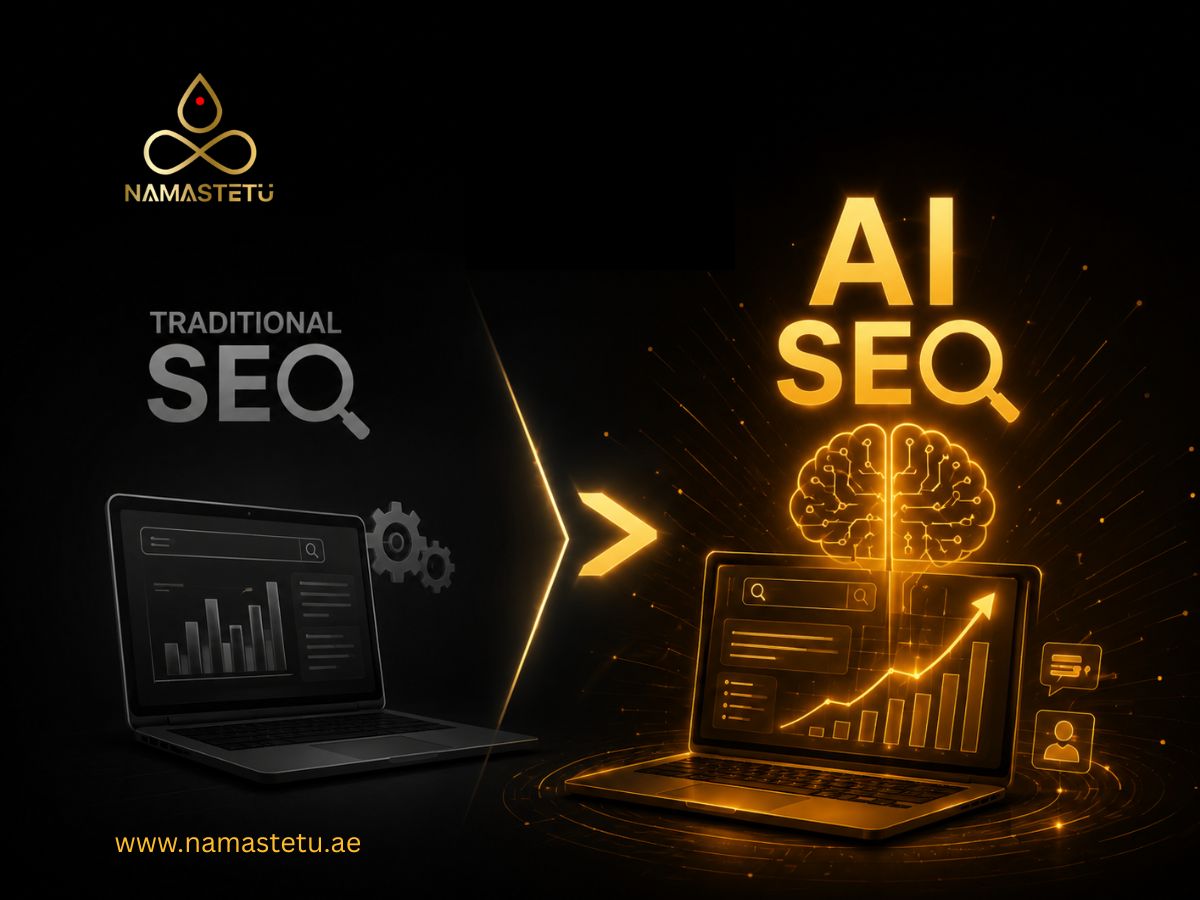
GEO Vs Traditional SEO: Quick Comparison
Before jumping into the checklist, it helps to see how GEO and SEO differ in practice, even though they work together.
| Factor | Traditional SEO | GEO (Generative Engine Optimization) |
| Goal | Rank in search result pages | Be cited inside AI-generated answers |
| Main signal | Keywords and backlinks | Clear structure, facts, and citations |
| Content style | Keyword-optimized pages | Answer-first, conversational content |
| Success metric | Rankings and clicks | Mentions and citations in AI answers |
| Update cycle | Ongoing, slower changes | Frequent refresh, every 60 to 90 days |
Both disciplines share the same end goal. You want your business to be found by the right person at the right moment, whether that person is scrolling Google or asking ChatGPT a question.
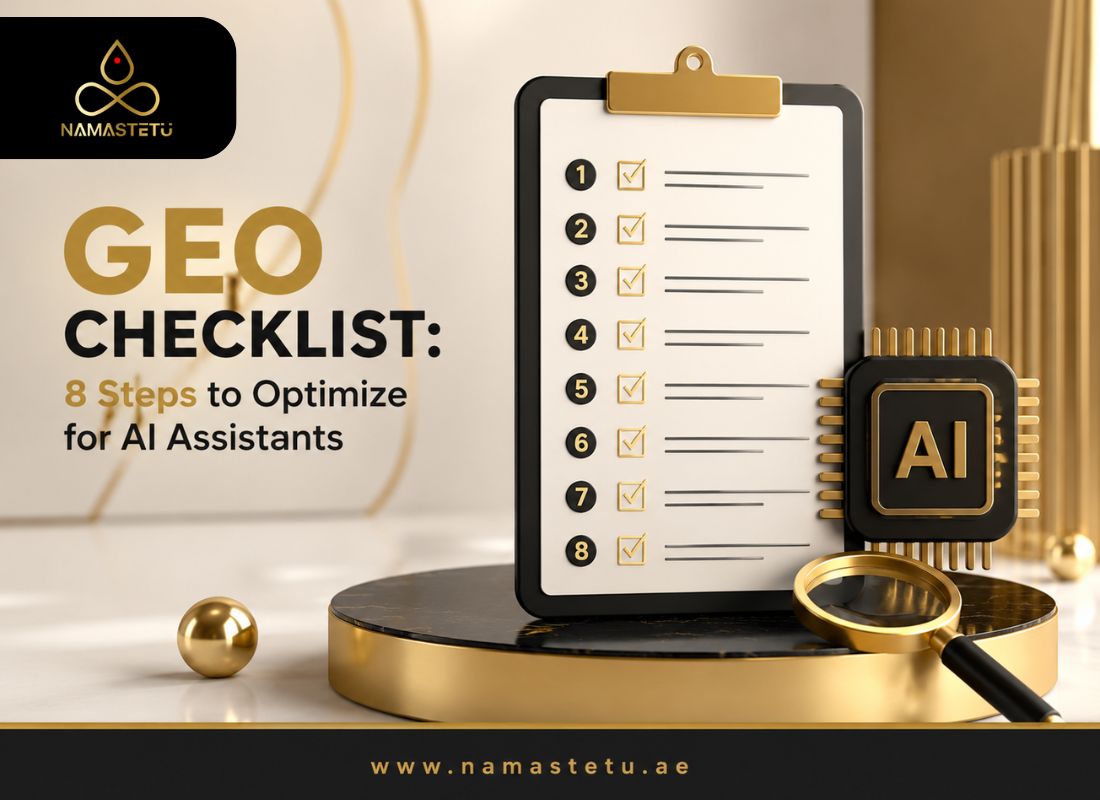
The 8-Step GEO Checklist
Here is the exact framework we follow as a GEO company in Dubai when we onboard a new client.
Step 1: Audit AI Crawler Access
AI systems cannot cite content they cannot read. Start by checking whether your robots.txt file is accidentally blocking AI crawlers used by ChatGPT, Perplexity, or Google’s AI systems.
Also check that your hosting provider or CDN, especially Cloudflare, is not silently rejecting AI bot requests. Many businesses lose visibility simply because a security setting blocks the very bots that would have quoted them.
- Review robots.txt for AI crawler rules
- Confirm your CDN or firewall is not blocking AI bots
- Consider adding an llms.txt file, a simple text file that helps AI systems understand your site structure
Step 2: Fix Basic Discoverability Fundamentals
This step has nothing to do with AI directly, yet it decides whether AI can reach your content at all. Server-rendered HTML, fast page loads, clean URLs, and a working sitemap.xml are non-negotiable.
If your important content loads only after JavaScript runs, many AI crawlers may never see it. This is one of the most common technical gaps we find when auditing a new client’s site.
Step 3: Structure Content for Easy Extraction
AI engines favor content that is broken into clear, self-contained sections, often called node-based content. Each section should answer one specific question completely, without requiring the reader to jump elsewhere for context.
Lead every section with a direct answer, then follow with supporting detail. This single change, leading with the answer instead of building up to it, is one of the fastest wins in any AI search optimization technique we use.
- Use one clear H2 or H3 per subtopic
- Answer the core question in the first one or two sentences of each section
- Use bullet points and numbered lists for scannability
- Avoid long, unbroken paragraphs
Step 4: Add Structured Data and Schema Markup
Schema markup gives AI systems a machine-readable summary of your page. FAQ schema, review schema, and product schema all make it easier for an AI assistant to lift accurate information straight from your site.
This is a technical step, so it usually needs a developer, but the payoff is significant. Pages with clean schema are far more likely to be pulled into AI-generated answers correctly.
Step 5: Build Citation-Worthy Authority
AI models weigh evidence, not just keywords. Original data, expert quotes, case studies, and clear author information all signal that your content is trustworthy enough to quote.
This is where Generative AI content optimization really separates strong brands from weak ones. If your competitor publishes an original study and you publish a generic summary, AI assistants will almost always cite the original source.
- Publish original research, surveys, or case data whenever possible
- Add clear author bios with real credentials
- Include expert quotes from your own team, not just external sources
- Keep facts and statistics updated, since outdated numbers hurt trust signals
Step 6: Optimize for Local and Regional Queries
Local businesses have a real advantage in GEO. AI assistants often look specifically for regional experts when a question is location-based, and businesses with clearly structured location information get mentioned noticeably more often in these answers.
If someone asks an AI assistant to recommend the best GEO company in Dubai, the assistant is far more likely to surface a business with clear, consistent NAP details (name, address, phone number), UAE-specific case studies, and locally relevant content, compared to a generic global brand with no regional signals.
- Keep business name, address, and phone number consistent across your website and directories
- Publish Dubai and UAE specific case studies or examples
- Mention your service area clearly in page content, not just in the footer
Step 7: Monitor AI Mentions and Citations
You cannot improve what you do not measure. Regularly check how often ChatGPT, Perplexity, Gemini, and Google AI Overviews mention or cite your brand when users ask questions in your category.
Tracking mentions and citations helps you identify exactly where your content is falling short, so you can prioritize which pages to fix first. This monitoring step is often the most overlooked part of any GEO best practices for businesses framework, yet it is what turns GEO from guesswork into a measurable strategy.
Step 8: Run a Continuous GEO Loop
GEO is not a one-time project. AI models and user behavior both change constantly, so content needs a regular refresh cycle, ideally every 60 to 90 days.
We treat this as an ongoing loop at Namastetu. Audit, refresh, re-check citations, then repeat. A business working with a GEO expert in Dubai on this cadence will consistently outperform one that treats GEO as a single setup task.
Why Choose Namastetu as Your GEO Agency in Dubai
We built this checklist from real client work, not theory. When we ran this exact process for a Dubai-based service business earlier this year, their content started appearing in AI Overview answers within six weeks of restructuring their top pages around Step 3 and Step 4 alone.
As a full-service digital marketing service in Dubai, we combine GEO with SEO, Google Ads, and website development, so your brand shows up wherever your customers are actually searching, whether that is a Google results page or a conversation with ChatGPT.
FAQs About GEO Service
1. What is GEO and how is it different from SEO?
GEO, or Generative Engine Optimization, structures content so AI assistants like ChatGPT and Gemini can find and cite it. SEO focuses on ranking in search results, while GEO focuses on being the actual answer inside AI-generated responses, though both work together.
2. How can I optimize my website for AI assistants using GEO techniques?
Start by checking AI crawler access in robots.txt, fixing basic site speed and rendering issues, structuring content with clear answer-first sections, adding schema markup, and building original, citation-worthy content backed by real authority signals.
3. Why should I hire a GEO agency in Dubai instead of doing it myself?
A local GEO agency in Dubai understands regional search behavior, UAE market context, and how to combine local SEO signals with AI optimization. This local expertise often produces faster, more relevant AI citations than a generic global approach.
4. What are the best ways to make content appear in ChatGPT and AI-generated answers?
Publish original data, use clear expert authorship, structure content in direct answer-first sections, implement FAQ schema, and consistently monitor which of your pages are already being cited so you can replicate what works.
5. How long does it take to see results from GEO?
Many businesses see early AI citation improvements within four to eight weeks after restructuring key pages, though full authority-building results, especially from original research and consistent publishing, typically take a few months to fully mature.
6. Do I need a separate strategy for GEO, or can I use my existing SEO plan?
You do not need a separate plan, but you do need additional steps layered on top of SEO, including schema markup, answer-first formatting, AI crawler access checks, and ongoing AI mention tracking that traditional SEO plans usually skip.
7. Which AI platforms should businesses focus on for GEO in 2026?
Focus on ChatGPT, Google AI Overviews and AI Mode, Gemini, and Perplexity, since these currently drive the largest share of AI-assisted search traffic. Track citations across all four rather than optimizing for only one platform.
8. Is GEO only useful for large enterprise brands?
No. Local and small businesses often see stronger relative gains, since AI assistants actively look for regional experts and businesses with clear location signals for location-based questions, giving smaller local brands a real competitive opening.
Conclusion
Generative Engine Optimization is becoming essential for businesses that want to stay visible as AI-powered search continues to grow. By following the right GEO framework, including improving crawler access, creating answer-focused content, implementing schema, building authority, and monitoring AI citations, brands can increase their chances of being featured in AI-generated responses. Businesses in Dubai need a future-ready approach that combines SEO fundamentals with GEO strategies to reach customers across platforms like ChatGPT, Gemini, and AI Overviews. Partnering with an experienced GEO agency in Dubai like Namastetu Technologies can help businesses adapt, compete, and grow in the evolving AI search landscape.