
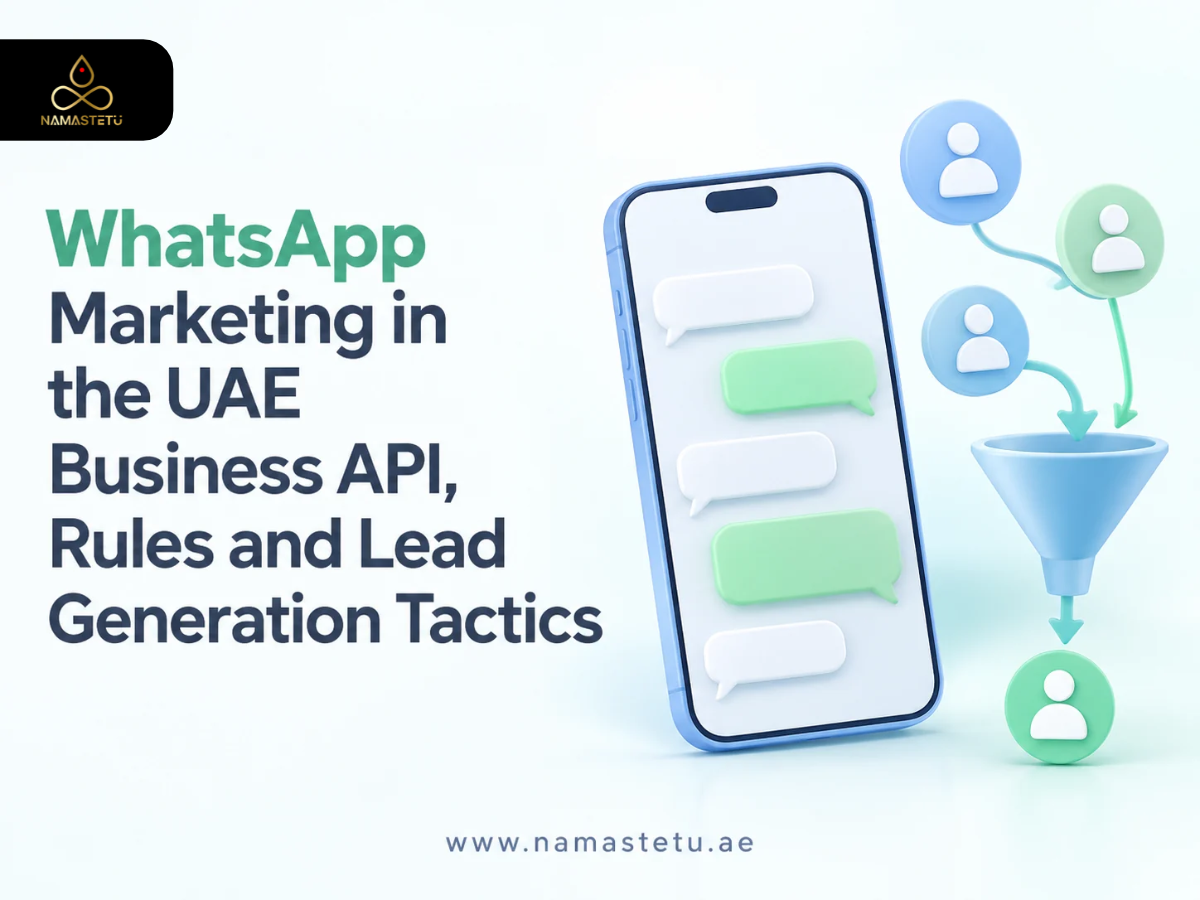
WhatsApp Business marketing UAE works best when you message only people who have agreed to hear from you, use the official API for scale, and reply fast with useful answers. Done this way, it turns a simple chat app into a reliable channel for enquiries, bookings and repeat sales. This guide covers the setup, the rules, and the tactics that bring in leads.
Why WhatsApp Works So Well in the UAE
People in the UAE already live on WhatsApp. They use it to talk to family, coworkers, landlords, doctors and shops. When a business shows up in that same space, it feels familiar instead of pushy.
Here is why the channel suits local buyers:
- Messages are opened far more often than most marketing emails.
- Customers like quick replies over phone calls or long forms.
- A multilingual audience can be served in English, Arabic, Hindi, Urdu and more.
- One chat can hold the whole journey, from first question to final payment link.
That last point matters most. A buyer who asks a question and gets an answer in minutes is far more likely to stay with you than one who waits a day for an email.
The Two Ways to Use WhatsApp for Business
Not every company needs the same tool. There are two options, and picking the wrong one is a common early mistake.
- The WhatsApp Business app
This is a free app built for small teams. You get a business profile, a product catalogue, quick replies and labels. It works well for a shop, a salon or a freelance consultant who handles a few dozen chats a day. - The WhatsApp Business API
This is built for growing teams. It connects to your CRM, supports many agents on one number, and allows automation and large scale messaging. Most mid-size and large companies end up here.
The app is easier to start with. The API is what lets you grow without losing track of customers.
What the WhatsApp Business API Actually Does
The WhatsApp Business API UAE companies use is not a separate app you download. It is a connection that links your business number to software, such as a CRM, a helpdesk or a chatbot tool. Your team then chats through that software instead of a phone screen.
Key things it allows:
- Several agents can answer from one business number.
- Chats can be routed by topic, language or sales team.
- Approved message templates can go out to opt in contacts at scale.
- Chatbots can handle common questions around the clock.
- Every conversation can be tracked and tied to a lead record.
Without this layer, a growing business ends up with messages scattered across personal phones, which is hard to measure and risky for data.
How to Set Up WhatsApp Business API for a UAE Company
If you are wondering how to set up WhatsApp Business API for a UAE company, the path is straightforward when you prepare the basics first. Here is the order that saves the most time.
- Gather your business documents. You will need your trade licence details and a working company website.
- Choose a number you can dedicate. It should not be tied to a regular WhatsApp account. A fresh landline or mobile number works.
- Pick an official solution provider. This is the partner that gives you API access and a dashboard to manage chats.
- Verify your business account. Verification adds credibility and unlocks higher messaging limits over time.
- Set up your profile. Add your logo, business description, address, hours and website.
- Create message templates. Templates are pre approved messages used to start a conversation. Each one is reviewed before it can be used.
- Connect your CRM or helpdesk. This is where the real value begins, because leads and chats now live in one place.
- Test everything. Send test messages, check the handoff from bot to human, and confirm that opt out requests are handled.
Many companies stop at step five and wonder why results are slow. The CRM connection and clear templates are what turn the channel into a lead machine.
Understanding WhatsApp Marketing Rules in the UAE
Many businesses worry about legal trouble here, and that worry is fair. The good news is that the core principles are simple.
WhatsApp marketing rules in the UAE come from two places: the platform’s own policies and UAE law. Treat both as binding.
Platform rules to follow
- Get a clear opt in before sending promotional messages.
- Use approved templates when you start a conversation after the support window has closed.
- Reply to customer messages within the allowed service window, which is a limited period after the customer last wrote to you.
- Never buy contact lists or message people who have not agreed to hear from you.
- Make it easy to stop messages at any time.
UAE law and regulator expectations
- The UAE personal data protection law expects you to collect only the data you need, use it for a stated purpose, and protect it.
- The telecom regulator discourages unwanted promotional contact, and there is a registry that lets people block marketing calls and messages.
- Misleading offers and unclear pricing can create consumer protection problems.
- Customers should be able to ask what data you hold and request its removal.
Rules can change, so it is wise to review current guidance or ask a legal adviser before launching a large campaign. As a safe habit, always ask yourself: did this person clearly agree to receive this message?
How to Get Opt Ins the Right Way
Opt in is the foundation of everything. Without it, even a brilliant message becomes spam.
Good ways to collect permission:
- A checkbox on your website contact form that clearly mentions WhatsApp updates.
- A “Chat with us” button that starts a conversation the customer begins.
- A QR code at your store, event stand or on printed material.
- A click to chat ad that opens a conversation when someone taps it.
- A reply keyword, such as asking customers to message a word to join offers.
Be honest about what people will receive. If you promise monthly offers and send daily messages, opt outs will rise fast.
WhatsApp Marketing Services in Dubai: When to Get Help
Running the channel in house is possible, but many teams find the setup, templates and automation more time consuming than expected. This is where WhatsApp marketing services in Dubai can help. A good partner handles the technical connection, writes templates that get approved, builds automated flows and reports on results.
Namaste TU supports businesses with exactly this kind of channel planning, so the technical side does not slow down your sales team.
How to Use WhatsApp Marketing to Generate Leads in the UAE
Here is where the channel starts paying back. If you want to know how to use WhatsApp marketing to generate leads in the UAE, focus on starting conversations, not blasting offers.
1. Turn ads into chats
Instead of sending ad clicks to a form, send them straight to a WhatsApp conversation. Forms feel like work. A chat feels like a quick question to a real person.
2. Use a short qualifying flow
When a new lead arrives, ask two or three simple questions:
- What are you looking for?
- When do you need it?
- Which area are you in?
This helps your team sort serious buyers from casual browsers before anyone spends time on a call.
3. Respond fast
The first few minutes decide a lot. A lead who gets an answer quickly is still thinking about you. A lead who waits starts talking to someone else.
4. Share proof inside the chat
Send a short portfolio, a customer story or a product video. Rich media works well here because the customer can view it without leaving the conversation.
5. Follow up with a purpose
If a lead goes quiet, send a helpful nudge instead of a generic reminder. Offer a checklist, a site visit slot or a quick answer to a common doubt.
WhatsApp Campaigns for Lead Generation: Ideas That Work
Well planned WhatsApp campaigns for lead generation rely on timing and relevance. Here are formats worth testing:
- Event invitations: Invite opted in contacts to a webinar, open house or product launch.
- Back in stock alerts: Tell interested shoppers when an item returns.
- Appointment reminders: Cut no shows for clinics, salons and service visits.
- Personal offers: Share a deal based on what the customer viewed or bought before.
- Feedback requests: Ask for a rating after a purchase, then invite happy customers to leave a review.
Keep each message short, with one clear action. If you ask people to do three things, most will do none.
Best WhatsApp Marketing Strategies for Businesses in Dubai
Dubai is a fast, competitive market with a very mixed audience. These strategies help you stand out.
- Segment your contacts. Residents, tourists, investors and corporate buyers want different messages.
- Offer language choice. Let people pick English or Arabic at the start of the chat.
- Match local timing. Avoid prayer times, late nights and the quietest parts of weekends. Respect festive periods and adjust your tone.
- Keep a human voice. Customers can tell when a message was written by a person who cares.
- Mix automation with real people. Bots should handle simple tasks. Complex questions need a human.
If you already run a broader online promotion, WhatsApp fits neatly next to it. Businesses that use digital marketing services in Dubai for ads, search and social media often find that WhatsApp becomes the place where those clicks turn into real conversations. For a wider view of how channels work together, read our guide on building a social media plan that supports sales.
WhatsApp Automation for Businesses: What to Automate and What Not To
WhatsApp automation for businesses saves hours, but only when used with care.
Good tasks to automate:
- Greeting new contacts and offering a menu of options
- Answering common questions about hours, location and services
- Booking confirmations and reminders
- Order and delivery updates
- Collecting basic details before passing the chat to a person
Tasks to keep human:
- Price negotiation and custom quotes
- Complaints and sensitive issues
- High value sales conversations
- Anything where the customer sounds upset or confused
A simple rule helps: if a wrong answer could cost trust or money, hand the chat to a person.
How to Automate WhatsApp Messages for Customer Engagement in the UAE
If you want to learn how to automate WhatsApp messages for customer engagement in the UAE, start small and build in layers.
- Begin with a welcome message. Greet new contacts and ask what they need.
- Add a quick reply menu. Let people tap options instead of typing.
- Create an away message. Tell customers when you will respond outside working hours.
- Build a lead qualification flow. Collect name, need and timing.
- Set up triggers. Send a reminder after a booking or a thank you after a purchase.
- Add a clear route to a human. Customers should always be able to type a word and reach a person.
- Review chat logs weekly. Look for questions the bot could not answer and improve it.
Strong WhatsApp customer engagement comes from this balance. Automation handles speed, while your team handles warmth.
WhatsApp Business App vs WhatsApp Business API: Quick Comparison
| Feature | WhatsApp Business App | WhatsApp Business API |
| Best for | Small shops and solo operators | Growing and large teams |
| Number of agents | Very limited | Many agents on one number |
| Automation | Basic greeting and quick replies | Advanced bots and flows |
| CRM connection | Not available | Fully supported |
| Bulk messaging | Not suited for it | Supported with approved templates |
| Reporting | Basic insights | Detailed analytics through your software |
| Setup effort | Very light | Needs a provider and technical setup |
| Cost model | Free to use | Depends on provider and message type |
If you handle only a few chats each day, the app is enough. Once your team grows or you need reports, the API makes more sense.
Common Mistakes to Avoid
Many brands lose trust on WhatsApp by repeating the same errors:
- Messaging people who never opted in
- Sending too many messages in a short time
- Using long, salesy paragraphs
- Ignoring replies for hours
- Skipping the opt out option
- Treating every contact the same way
Fixing even two or three of these can lift response rates quickly.
How to Measure Results
You cannot improve what you do not track. Watch these numbers each month:
- Delivery and read rates: Are your messages reaching people?
- Reply rate: Are customers engaging?
- Lead to sale rate: How many chats become customers?
- Response time: How fast does your team answer?
- Opt out rate: A rising number means your messages need work.
Tie these back to your CRM so you can see which campaigns bring real revenue, not just chat volume.
Frequently Asked Questions
1. What is WhatsApp Business marketing in the UAE?
It is the practice of using WhatsApp to attract, talk to and keep customers in the UAE. This includes click to chat ads, automated replies, appointment reminders, and offers sent to people who agreed to receive them.
2. Is WhatsApp marketing legal in the UAE?
Yes, when done with permission and with respect for data protection rules. Businesses should get clear opt in, explain how data is used, and offer an easy way to stop messages.
3. Do I need the WhatsApp Business API for marketing?
Not always. A small business can start with a free business app. The API becomes useful when you need many agents, automation, CRM links or larger scale messaging.
4. How do I set up the WhatsApp Business API for my UAE company?
Prepare your business details, choose a dedicated number, work with an official provider, verify your account, create templates and connect your CRM. Test the full flow before going live.
5. Can I send bulk WhatsApp messages in the UAE?
You can send messages in volume through the API to contacts who opted in, using approved templates. Sending to people who never agreed can lead to account restrictions and legal risk.
6. How can WhatsApp help generate leads?
It lets you start conversations from ads, websites and QR codes, qualify buyers with a few questions, and follow up quickly. Faster, friendlier replies usually mean more enquiries turn into sales.
7. Can WhatsApp messages be automated?
Yes. You can automate greetings, FAQs, reminders and order updates. Keep a clear path to a human for complex or sensitive questions.
8. How long does it take to see results?
Many businesses notice better response times within the first few weeks. Lead quality and sales impact grow as you refine templates, flows and segments.
Conclusion
WhatsApp gives UAE businesses a direct, personal way to reach customers, but it rewards respect more than volume. Get permission first, set up the API properly, keep your messages short and useful, and let automation handle the routine work while people handle the relationships. Follow those habits and the channel becomes a steady source of leads and loyal customers.
Ready to Turn Chats into Customers?
If you want a clear plan for WhatsApp that fits your business, Namaste TU can help you plan, set up and grow it the right way. Get in touch today and start more conversations that lead to real sales.