
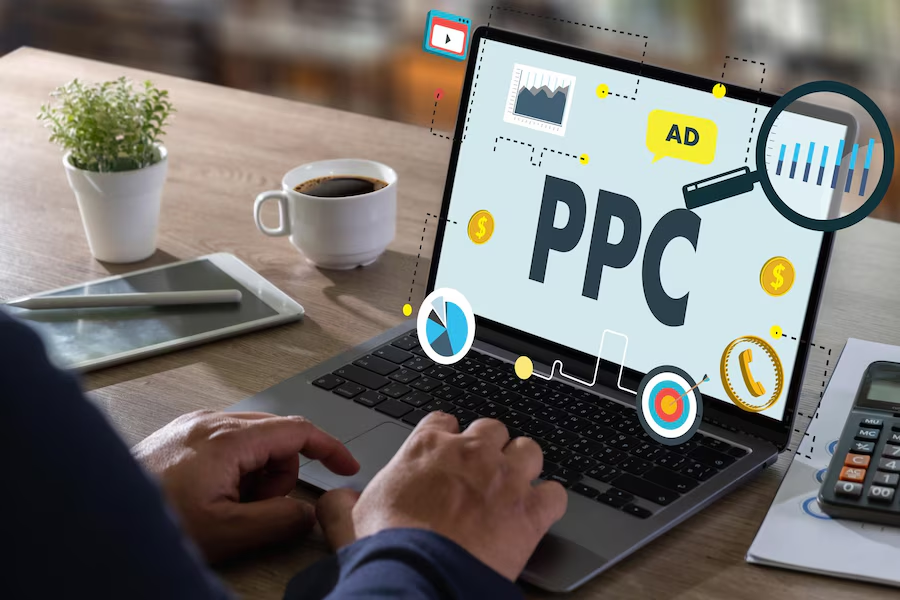
If you have ever searched for a product on Google and noticed a website at the very top labeled “Ad,” you have already seen PPC in action. Working with a skilled PPC agency in Dubai helps businesses turn that visibility into real, measurable leads.
According to Google’s own advertising data, businesses earn an average of 2 dollars in revenue for every 1 dollar spent on Google Ads. That return is exactly why paid search remains one of the fastest ways to generate traffic in a competitive market like Dubai.
What Is PPC? A Simple Explanation
PPC stands for Pay-Per-Click, an online advertising model where businesses pay a fee each time someone clicks their ad. Instead of paying for space regardless of results, you are only charged when a real person shows interest by clicking through.
These ads appear at the top of search results, on social media platforms, and across various websites within an ad network. The most common and widely used platform for this is Google Ads, which is why many businesses search specifically for AdWords agency Dubai providers.
Think of PPC like renting a prime storefront on a busy street, except you only pay rent the moment someone actually walks through your door. This makes it one of the most cost-efficient forms of advertising when managed correctly.
What Is SEM? Understanding the Bigger Picture
SEM stands for Search Engine Marketing, and it is often misunderstood as being the same thing as PPC. In reality, Search Engine Marketing is the umbrella term that covers all paid strategies used to increase visibility on search engines, with PPC being its largest and most common component.
While SEO focuses on earning free, organic rankings, SEM focuses specifically on paid placements. Some marketers also include other paid tactics like shopping ads and display advertising under the SEM umbrella.
Understanding PPC vs SEM this way makes it much easier to see how they fit together. PPC is a tool, while SEM is the overall paid search strategy that uses that tool effectively.
PPC vs SEM: What Is the Real Difference?
This is one of the most commonly asked questions in digital marketing, so let us clarify the difference between PPC and SEM marketing for businesses in a straightforward way.
- PPC refers specifically to the pay-per-click pricing model, where advertisers pay only for clicks.
- SEM refers to the entire paid search marketing strategy, which includes PPC campaigns, keyword research, bid management, and ad optimization.
- PPC is essentially one piece of the SEM puzzle, not a separate, competing strategy.
- Some professionals use the terms interchangeably in casual conversation, but technically, SEM is the broader category.
Understanding this distinction helps businesses communicate more clearly with any PPC services in Dubai providers they choose to work with.
How PPC Advertising Works
Understanding how PPC advertising works helps demystify what actually happens behind the scenes of every paid campaign.
- Keyword Selection. Advertisers choose specific keywords relevant to their business that potential customers are likely searching for.
- Bidding. Advertisers set a maximum amount they are willing to pay per click on those keywords.
- Ad Auction. Every time someone searches, an automatic auction runs between advertisers bidding on that keyword.
- Quality Score. Google evaluates ad relevance, landing page quality, and expected click-through rate, not just bid amount.
- Ad Placement. The winning ads appear in prominent positions on the search results page.
- Payment. The advertiser is only charged when a user actually clicks the ad, not simply for it being shown.
This system rewards relevance and quality, not just budget size, which is why strategic PPC campaign management consistently outperforms simply increasing ad spend.
Benefits of PPC and SEM Marketing
Understanding the benefits of PPC and SEM marketing campaigns makes it clear why so many Dubai businesses invest in this channel alongside SEO.
- Immediate visibility. Unlike SEO, PPC can place your business at the top of search results within hours.
- Highly targeted reach. You can target by location, device, time of day, and even user behavior.
- Measurable results. Every click, cost, and conversion is trackable in real time.
- Budget control. You set daily or monthly limits, so spending never exceeds what you approve.
- Fast testing. PPC allows businesses to quickly test messaging, offers, and audiences before committing to larger strategies.
This is exactly how PPC advertising helps businesses increase website traffic quickly, especially for new websites still building organic authority.
PPC vs SEO: Which One Should You Choose?
| Factor | PPC (Paid) | SEO (Organic) |
| Speed of results | Immediate, within hours | Gradual, over months |
| Cost structure | Ongoing cost per click | Upfront investment, lower long-term cost |
| Traffic longevity | Stops when budget ends | Continues after ranking is achieved |
| Control | Full control over targeting and budget | Limited direct control over algorithm |
| Best for | Quick campaigns, product launches, testing | Long-term brand visibility and trust |
As this table shows, PPC and SEO are not competitors, they are complementary tools that work best when used together as part of a complete digital strategy.
Search Engine Advertising Platforms Beyond Google
While Google Ads dominates the conversation, search advertising platforms also include Microsoft Advertising (Bing Ads), and paid search options within social platforms like Meta and LinkedIn. Choosing the right platform depends heavily on where your target audience actually spends their time searching.
For most Dubai-based businesses, Google remains the primary focus due to its overwhelming search market share. However, a well-rounded online advertising campaigns strategy often includes secondary platforms to capture additional, lower-competition traffic.
How PPC Campaign Management Works With an Agency
Effective PPC campaign management requires ongoing monitoring, not a simple “set it and forget it” approach. Costs, competition, and user behavior shift constantly, which is why professional oversight makes a measurable difference in results.
A qualified PPC agency in Dubai typically handles the following:
- Keyword research and competitor analysis
- Ad copywriting and A/B testing
- Landing page optimization for better conversions
- Daily bid adjustments and budget management
- Detailed performance reporting and ROI tracking
According to guidance published by Google’s own Think with Google resource, businesses that regularly optimize campaigns based on performance data consistently outperform those running static, unmonitored ads.
Common PPC Mistakes Businesses Make
Even well-intentioned businesses often waste ad budgets through avoidable mistakes. Some of the most common include:
- Targeting overly broad keywords that attract irrelevant clicks
- Sending traffic to a slow or poorly designed landing page
- Ignoring negative keywords, which filter out unwanted searches
- Failing to track conversions properly, making ROI impossible to measure
- Setting budgets without ongoing monitoring or adjustment
Avoiding these mistakes is often the difference between wasted ad spend and a genuinely profitable campaign.
How to Use PPC and SEM Marketing to Generate Leads
Turning clicks into actual customers requires more than just running ads. Businesses looking to understand how to use PPC and SEM marketing to generate leads should focus on the full customer journey, not just the click itself.
- Create dedicated landing pages that match the ad’s message exactly
- Include a clear, single call to action on every page
- Use compelling, benefit-focused ad copy rather than generic descriptions
- Continuously test and refine based on real performance data
- Track conversions accurately to understand true return on investment
This complete approach is what separates a genuinely effective AdWords management Dubai strategy from one that simply spends money without a clear plan.
FAQs About PPC Advertising
1. What is PPC and SEM marketing and how does it work?
PPC is a paid advertising model charging per click, while SEM is the broader paid search strategy that includes PPC. Together, they help businesses appear instantly in search results for targeted keywords.
2. What is the difference between PPC and SEM marketing for businesses?
PPC refers specifically to the click-based pricing model, while SEM covers the entire paid search strategy, including keyword research and campaign management. PPC is essentially one part of the larger SEM approach.
3. How much does PPC advertising cost in Dubai?
Costs vary based on industry competition and keyword demand. Most PPC services in Dubai offer flexible monthly budgets, allowing businesses to scale spending as they see measurable results and returns.
4. Is PPC better than SEO for my business?
Neither is strictly better, they serve different purposes. PPC delivers immediate traffic, while SEO builds long-term organic visibility. Most successful strategies combine both for balanced, sustainable growth.
5. How quickly can I see results from PPC campaigns?
PPC campaigns can generate traffic within hours of launching. However, meaningful optimization and consistent lead quality typically take a few weeks of data and adjustment.
6. Do I need a separate landing page for PPC ads?
Yes, dedicated landing pages significantly improve conversion rates. Sending traffic to a generic homepage instead of a targeted page usually results in lower conversions and wasted ad spend.
7. What platforms are best for PPC advertising?
Google Ads remains the top choice due to its massive search market share. Microsoft Advertising and social platforms like Meta can also provide valuable, lower-competition additional traffic.
8. Can I manage PPC campaigns myself without an agency?
Basic campaigns are possible independently, but competitive bidding, quality score optimization, and conversion tracking often require expertise. A professional agency typically delivers better ROI and saves valuable time.
Final Thoughts
PPC and SEM marketing offer businesses a fast, measurable, and highly targeted way to reach customers who are actively searching for their products or services. Unlike organic strategies that take time to build, paid search can generate visibility and leads almost immediately, making it a valuable tool for launches, promotions, and ongoing growth. The real advantage comes from proper campaign management, clear tracking, and continuous optimization rather than simply increasing budget. When paired with a strong SEO foundation, PPC becomes even more powerful, covering both immediate and long-term visibility goals. Businesses that invest in professional management typically see stronger returns and fewer wasted clicks over time. Getting started with the right strategy from day one makes all the difference.